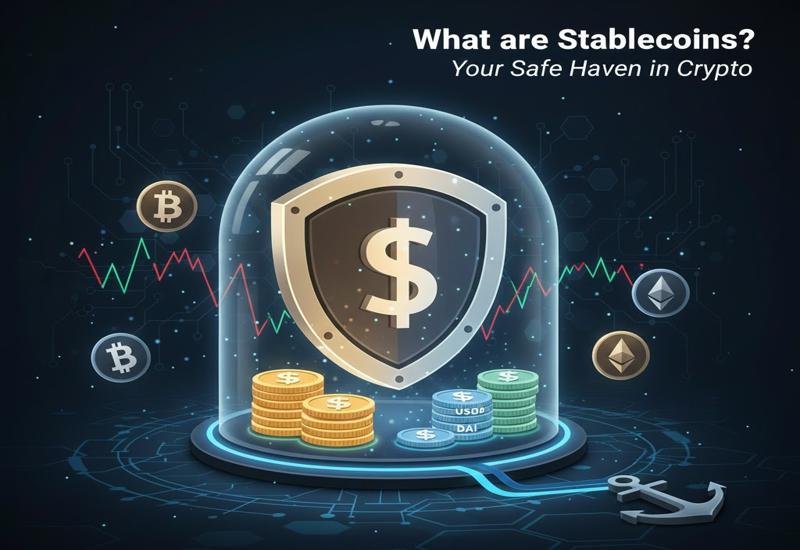
If you’ve been learning about cryptocurrency, you’ve probably noticed one major problem: prices swing wildly. Moreover, Bitcoin can drop 20% in a day, making it nerve-wracking for beginners. Therefore, you might be wondering: “Is there a cryptocurrency that doesn’t fluctuate so dramatically?”
The answer is yes—stablecoins. In this guide, we’ll explain exactly what stablecoins are, how they work, and why they’re essential for anyone entering the crypto world. Additionally, you’ll learn whether stablecoins might be useful for your crypto journey.
What are Stablecoins? The Simple Answer
Stablecoins are cryptocurrencies designed to maintain a stable value, typically equal to $1 USD. Moreover, they combine the benefits of cryptocurrency (fast transfers, global access) with the stability of traditional currency. Consequently, you get digital money that doesn’t wildly fluctuate in value.
Think of it this way: Regular cryptocurrencies are like stocks—the price changes constantly. However, stablecoins are like digital dollars—they stay at $1 regardless of market conditions.
The Key Facts About Stablecoins
First and foremost, here’s what you need to know:
- Value: Designed to equal $1 USD
- Stability: Price stays relatively constant
- Backed: Usually backed by real dollars in bank accounts
- Usage: Transfer value without volatility
- Popular examples: USDC, USDT (Tether), DAI, BUSD
- Market size: Over $150 billion in circulation
Why Do Stablecoins Exist?
To understand stablecoins, you first need to understand the problem they solve. Therefore, let’s explore why the crypto world needed stable currencies.
The Volatility Problem
First and foremost, most cryptocurrencies are extremely volatile. Specifically:
- Bitcoin can swing 10-20% in a day
- Smaller cryptocurrencies can move 30-50% or more
- Long-term holders might accept this
- However, everyday users cannot
Real-world problem: Imagine buying coffee with Bitcoin. Moreover, imagine if that Bitcoin doubled in value the next day. Consequently, you’d regret “spending” it. Conversely, if Bitcoin crashed, the merchant would lose money.
Therefore, cryptocurrency needs stability for everyday transactions.
The Solution: Stable Value + Crypto Benefits
Consequently, stablecoins were created to provide:
Stable Value: Always worth approximately $1, so you know what you’re getting
Crypto Advantages:
- Fast transfers (minutes instead of days)
- Low fees (especially for international transfers)
- Global access (anyone with internet)
- 24/7 availability (no bank hours)
- Works seamlessly with other cryptocurrencies
Therefore, stablecoins give you the best of both worlds.
How Do Stablecoins Stay at $1?
Now you’re probably wondering: How do stablecoins maintain their value? Moreover, what prevents them from crashing like other cryptocurrencies? Therefore, let’s explore the main mechanism.
Fiat-Backed Stablecoins (Most Common)
First and foremost, most stablecoins are backed by real currency in bank accounts. Specifically:
How it works:
- A company (like Circle or Tether) holds real US dollars in a bank
- For every dollar held, they issue one stablecoin token
- If you want your dollar back, you return the token
- The company destroys the token and gives you $1
Think of it like this: It’s similar to old-fashioned paper money backed by gold. However, instead of gold, stablecoins are backed by dollars in a bank account.
Popular examples:
- USDC (USD Coin): Backed by Circle and Coinbase, fully transparent
- USDT (Tether): The largest stablecoin by volume
- BUSD (Binance USD): Issued by Binance and Paxos
Advantages:
- Simple to understand
- Relatively secure
- Easy to verify backing
Key point: You’re trusting the company to actually hold the dollars they claim. Therefore, transparency and audits are crucial.
The Most Popular Stablecoins Explained
Now let’s examine the major stablecoins you’ll encounter. Therefore, you’ll know which ones to trust and use.
USDC (USD Coin) – Most Transparent
Issued by: Circle and Coinbase
Backing: US dollars and short-term US Treasury bonds
Transparency: Monthly attestation reports published
Why it’s popular:
- Fully backed by verifiable reserves
- Transparent financial reporting
- Strong regulatory compliance
- Widely supported on exchanges
- Trusted by institutions
Best for: Users who prioritize transparency and security
USDT (Tether) – Largest by Volume
Issued by: Tether Limited
Backing: Claims to be backed by US dollars and equivalents
Volume: Largest stablecoin by daily trading volume
Why it’s popular:
- Most widely accepted
- Highest liquidity
- Available on almost every exchange
- Long track record (since 2014)
Considerations:
- Less transparency than USDC
- Historical questions about full backing
- Ongoing regulatory scrutiny
Best for: Trading and quick conversions (due to high liquidity)
DAI – Most Decentralized
Issued by: MakerDAO (decentralized protocol)
Backing: Overcollateralized with cryptocurrency
Transparency: Completely transparent (all on blockchain)
Why it’s popular:
- No single company controls it
- Truly decentralized
- Transparent collateralization
- Aligns with crypto philosophy
Tradeoffs:
- More complex to understand
- Slightly less stable than fiat-backed
- Requires understanding of DeFi
Best for: Users prioritizing decentralization
How to Use Stablecoins
Now that you understand what stablecoins are, let’s explore their practical applications. Therefore, you’ll see why they’re so useful.
1. Safe Haven During Volatility
First and foremost, stablecoins provide shelter from crypto market storms:
Scenario: You bought cryptocurrency, and now it’s up 50%. Moreover, you think a correction is coming. Therefore, you have options:
Option A: Sell for Regular Money
- Convert to USD on your exchange
- Wait for prices to drop
- However, this might trigger taxes
- Additionally, money might be stuck on the exchange
Option B: Convert to Stablecoins
- Swap to USDC instantly
- Your value stays stable at current levels
- Money remains in crypto ecosystem
- Ready to buy back quickly when opportunity arises
Consequently, stablecoins let you “sit on the sidelines” without leaving crypto.
2. Easy Transfers and Payments
Additionally, stablecoins excel at sending money:
International Transfers: Send $10,000 to another country in minutes, not days. Moreover, fees are just a few dollars instead of $30-50.
Peer-to-Peer: Send exactly $100 to a friend without worrying about price changes between sending and receiving.
Merchant Payments: Some businesses accept stablecoins because they don’t face volatility risk.
Therefore, stablecoins work like digital cash that moves at internet speed.
3. Entry Point for Beginners
Moreover, stablecoins provide a gentle introduction to crypto:
Low-Risk Learning: Buy USDC and practice:
- Sending and receiving
- Using wallets
- Understanding blockchain
- All without price risk
Waiting Period: Keep funds in stablecoins while researching. Subsequently, you can buy crypto when ready without delays.
Emergency Reserve: Maintain some stablecoins for buying opportunities. Therefore, you can act quickly when prices dip.
4. Earning Interest
Furthermore, you can earn interest on stablecoins:
Some platforms offer: 3-8% annual interest on stablecoin deposits
Comparison: Regular savings accounts typically pay 0.5-2%
Important warning: High yields always carry risk. Moreover, understand what you’re doing before chasing returns. Additionally, platforms can fail or be compromised.
Stablecoins vs. Regular Money
To better understand stablecoins, let’s compare them to traditional currency:
| Feature | Stablecoins | Bank Account USD |
|---|---|---|
| Value | $1 = $1 | $1 = $1 |
| Volatility | Very low | None |
| Transfer Speed | Minutes | Hours to days |
| Transfer Cost | $1-5 typically | $0-50+ |
| Availability | 24/7/365 | Business hours |
| Accessibility | Anyone with internet | Requires bank account |
| Reversibility | Cannot reverse | Can sometimes reverse |
| Privacy | Pseudonymous | Tied to identity |
| Insurance | Usually none | FDIC insured ($250k) |
Risks You Should Understand
Now let’s address the risks honestly. After all, stablecoins aren’t completely without danger.
1. Depegging Risk
First and foremost, stablecoins sometimes temporarily lose their $1 peg:
What happens: Stablecoin drops to $0.98 or rises to $1.02
Common causes:
- Large sudden demand or supply changes
- Market panic or uncertainty
- Technical issues with backing mechanism
Usually: The peg recovers quickly (minutes to hours)
What to do: Stick with well-backed stablecoins like USDC. Moreover, don’t panic during brief deviations.
2. Company Risk
Additionally, with centralized stablecoins, you’re trusting a company:
The risk: The issuing company could:
- Not actually have full backing
- Go bankrupt
- Get hacked
- Face regulatory shutdown
Mitigation: Choose transparent stablecoins with regular audits (USDC). Furthermore, don’t keep more than necessary.
3. Not FDIC Insured
Finally, understand that stablecoins aren’t like bank deposits:
Bank account: FDIC insured up to $250,000
Stablecoins: No federal insurance (though some issuers provide private insurance)
Implication: If something goes wrong, you might not be protected
Solution: Don’t treat stablecoins as a savings account replacement. Instead, use them for their intended purposes (transfers, temporary storage).
4. Regulatory Uncertainty
Moreover, governments are still figuring out how to regulate stablecoins:
Potential issues:
- New laws could restrict stablecoin usage
- Issuers might face increased requirements
- Some stablecoins could be banned
What to do: Use well-regulated stablecoins. Additionally, stay informed about regulatory changes.
How to Buy and Use Stablecoins
Now let’s get practical. Therefore, here’s how to actually acquire and use stablecoins.
Buying Stablecoins
First, you’ll need a cryptocurrency exchange:
Method 1: Direct Purchase
- Sign up on Coinbase, Kraken, or Binance
- Complete verification
- Deposit USD via bank transfer
- Buy USDC or USDT directly
- 1 USD = approximately 1 stablecoin
Method 2: Conversion
- Buy cryptocurrency first
- Trade it for stablecoins on the exchange
- Useful if you want to lock in crypto gains
Cost: Usually minimal or no fees for purchasing stablecoins
Storing Stablecoins
Next, decide how to store your stablecoins:
For Small Amounts (< $1,000):
- Keep on the exchange
- Convenient for trading
- Quick access when needed
For Medium Amounts ($1,000-10,000):
- Software wallet like MetaMask
- You control the private keys
- Balance of security and convenience
For Large Amounts (> $10,000):
- Hardware wallet (Ledger, Trezor)
- Maximum security
- Appropriate for long-term storage
Important note: Stablecoins on Ethereum require ETH for gas fees. Therefore, keep some ETH in your wallet for transactions.
Common Questions About Stablecoins
Let’s address frequent beginner questions:
Q: Are stablecoins completely safe?
A: No investment is completely safe. However, major stablecoins like USDC are relatively low-risk compared to volatile cryptocurrencies. Nevertheless, they’re not FDIC insured like bank accounts.
Q: Why would I use stablecoins instead of keeping dollars in my bank?
A: Several reasons: faster international transfers, 24/7 availability, access to crypto platforms, and lower fees. Moreover, stablecoins work globally without currency conversion.
Q: Can stablecoins lose value?
A: In theory, they could if the issuer fails or loses backing. Additionally, they sometimes briefly deviate from $1 during market stress. However, major stablecoins maintain their peg reliably.
Q: Which stablecoin should beginners use?
A: USDC is generally recommended for beginners due to its transparency and regulatory compliance. Furthermore, it’s widely accepted and fully backed.
Q: Do I need stablecoins if I’m just buying and holding Bitcoin?
A: Not necessarily. However, stablecoins are useful for taking profits without leaving crypto or for waiting to buy at better prices.
Common Stablecoin Myths
Before we wrap up, let’s clear up some misunderstandings:
Myth: “Stablecoins are risk-free”
Reality: While less risky than volatile crypto, stablecoins carry company risk, regulatory risk, and aren’t federally insured.
Myth: “All stablecoins are the same”
Reality: Stablecoins differ significantly in backing, transparency, and decentralization. Moreover, some are much safer than others.
Myth: “Stablecoins can make you rich”
Reality: Stablecoins are designed to maintain value, not appreciate. Therefore, they’re tools for stability, not investment growth.
Key Takeaways: What You Need to Remember
To summarize, here are the essential points about stablecoins:
What They Are:
- Cryptocurrencies designed to maintain $1 value
- Combine crypto benefits with price stability
- Usually backed by real dollars in bank accounts
- Essential infrastructure for crypto ecosystem
Why They’re Useful:
- Transfer money quickly and cheaply
- Safe haven during market volatility
- Entry point for beginners (low risk)
- Global, 24/7 availability
- Stay in crypto without price risk
Major Options:
- USDC: Most transparent, best for security-conscious
- USDT: Highest liquidity, best for trading
- DAI: Decentralized, more complex
Risks to Understand:
- Not FDIC insured
- Company/counterparty risk
- Regulatory uncertainty
- Brief depegging possible
- Requires understanding scam risks
Best Practices:
- Use for intended purposes (not long-term savings)
- Choose transparent, well-backed options
- Store securely based on amount
- Keep reasonable amounts (not entire net worth)
- Understand gas fees for transactions
Final Thoughts: Your Stablecoin Strategy
Ultimately, stablecoins are a powerful tool in your cryptocurrency toolkit. Moreover, they solve real problems that volatile cryptocurrencies cannot address. However, they’re not a replacement for traditional banking—they’re a complement.
Therefore, think of stablecoins as:
- A bridge between traditional and crypto finance
- A safe harbor during volatile markets
- A practical tool for transfers and payments
- An entry point for learning crypto
However, don’t think of them as:
- A risk-free investment (nothing is truly risk-free)
- A get-rich opportunity (they’re stable, not appreciating)
- A complete replacement for bank accounts
If you’re just starting with cryptocurrency, consider buying a small amount of USDC to:
- Practice using wallets
- Understand blockchain transactions
- Keep funds ready for buying opportunities
- Learn without price volatility stress
If you’re considering using stablecoins as part of your strategy, ensure you choose a reputable, regulated exchange. While assets like USDC are designed to minimize volatility, remember that all crypto assets carry risks, including platform security and the potential for a stablecoin to lose its ‘peg’ to the dollar.
External Resources:
- Circle: USDC Transparency – Official USDC information and reserve reports
- CoinMarketCap: Stablecoins – Track all stablecoins and market data
- Investopedia: Stablecoins – Additional educational content
Disclaimer: This article is for educational purposes only. Stablecoins carry risks including counterparty risk, regulatory risk, and depegging risk. They are not FDIC insured. Always do your own research before using any financial product.
Disclaimer: This article is for educational purposes only and is not financial advice. Cryptocurrency is highly volatile and risky. Only invest money you can afford to lose. Past performance is no guarantee of future results. Always do your own research and consider consulting a qualified financial advisor.
