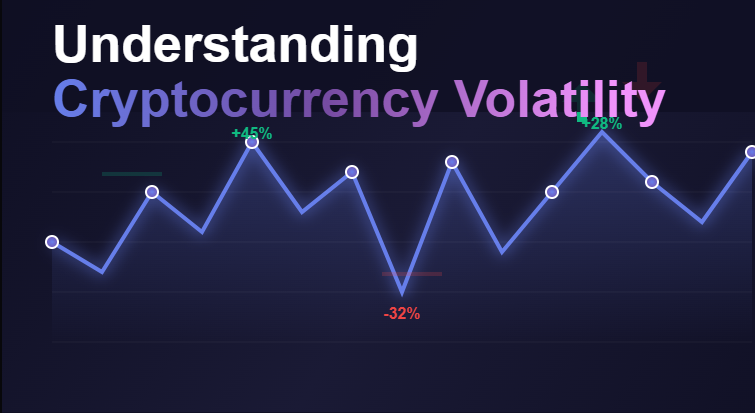
If you’ve spent even five minutes watching cryptocurrency prices, you’ve probably experienced both excitement and panic within the same hour. Moreover, you’ve likely seen Bitcoin drop 15% one day and surge 20% the next. Additionally, you might be wondering: “Is this normal? Should I be worried?”
Here’s the truth: Cryptocurrency volatility is completely normal—and it’s one of the defining characteristics of this asset class. Furthermore, while the dramatic price swings can be stressful, understanding why they happen will help you stay calm and make better decisions.
In this comprehensive guide, we’ll explain exactly what volatility is, why crypto is so much more volatile than traditional investments, and most importantly, how to manage it without losing your peace of mind. Therefore, by the end of this article, you’ll understand that volatility isn’t something to fear—it’s simply part of the crypto journey.
What is Volatility? The Simple Explanation
Volatility is a measure of how quickly and dramatically an asset’s price changes. Moreover, it’s the speed and magnitude of price movements, regardless of direction. Consequently, an asset can be volatile both on the upside (rapid gains) and downside (sudden drops).
Think of it this way: A calm lake represents low volatility—the surface barely moves. In contrast, ocean waves during a storm represent high volatility—the water level changes dramatically and rapidly. Similarly, crypto prices act more like stormy seas than calm lakes.
A Real-World Example
Let’s compare two scenarios to illustrate volatility:
Low Volatility (Traditional Savings Account):
- January 1: $10,000
- March 1: $10,050
- June 1: $10,100
- December 31: $10,200
Total change: 2% over entire year. Moreover, the price barely moved.
High Volatility (Cryptocurrency):
- January 1: $10,000
- March 1: $7,500 (down 25%)
- June 1: $12,000 (up 60% from March)
- December 31: $15,000 (up 50% from start)
Total change: 50% gain, but with extreme swings along the way. Furthermore, you experienced both significant drops and rallies.
Therefore, volatility isn’t just about the final result—it’s about the emotional rollercoaster ride getting there.
Why is Cryptocurrency So Volatile?
Now that you understand what volatility is, let’s explore why cryptocurrency experiences such dramatic price swings. Specifically, several key factors combine to create this environment.
1. Relatively Small Market Size
First and foremost, while the crypto market seems large, it’s actually tiny compared to traditional markets.
The numbers:
- Total crypto market: ~$1-2 trillion
- Global stock market: ~$100 trillion
- Global real estate: ~$280 trillion
- Global bond market: ~$130 trillion
Consequently, it doesn’t take as much money to move crypto prices. Specifically, when large institutional investors (called “whales”) buy or sell significant amounts, there aren’t always enough buyers or sellers on the other side. Therefore, prices swing wildly to find equilibrium.
Simple analogy: Imagine dropping a rock in a small pond versus the ocean. In the small pond, you see big waves. Similarly, large trades create bigger price movements in the smaller crypto market.
2. Speculative Nature and Market Sentiment
Additionally, crypto valuations are primarily based on speculation about future potential, not established earnings like traditional stocks.
Traditional stocks: Companies have earnings, revenue, and assets. Therefore, there’s a fundamental baseline for valuation.
Cryptocurrency: Value is mostly based on beliefs about future adoption and utility. Consequently, sentiment swings dramatically affect prices.
How sentiment drives prices:
Positive News (Hype):
- A tweet from a major CEO
- News about a country adopting crypto
- Major company accepting cryptocurrency
- Result: Massive buying frenzy, prices surge
Negative News (FUD – Fear, Uncertainty, Doubt):
- Regulatory concerns
- Exchange hacks or scams
- Negative media coverage
- Result: Panic selling, prices crash
Moreover, because crypto investors are often passionate and emotional about their investments, these swings get amplified quickly.
3. 24/7 Global Trading
Furthermore, unlike traditional stock markets, crypto never closes. Specifically:
Traditional markets: Trade 9:30 AM – 4:00 PM EST, Monday-Friday. Therefore, you get breaks from price action.
Crypto markets: Trade 24 hours a day, 7 days a week, 365 days a year globally. Consequently, momentum never stops.
The impact: Price movements can accelerate overnight while you’re sleeping. Additionally, there’s no “cooldown period” for markets to digest news. As a result, panic or excitement can spread rapidly across global markets without interruption.
4. Lack of Traditional Regulation
Moreover, traditional markets have built-in mechanisms to slow extreme volatility:
Stock market protections:
- Circuit breakers (trading halts during crashes)
- Price limits on daily movements
- Mandatory cooling-off periods
- Strict manipulation rules
Crypto markets: Few of these protections exist. Therefore, prices can move as fast and far as supply and demand dictate. Consequently, you can see 30% swings in hours—something nearly impossible in regulated stock markets.
5. Leverage and Derivatives
Additionally, many crypto traders use leverage (borrowed money) to amplify their positions:
How it works: A trader with $1,000 might use 10x leverage to control $10,000 worth of cryptocurrency.
The problem: When prices move against leveraged positions, traders must close positions quickly to avoid losses. Consequently, this forced selling creates cascading price drops.
The result: Leverage amplifies both gains and losses, making volatility even more extreme.
6. Thin Order Books
Finally, many cryptocurrencies have “thin order books”—meaning there aren’t many buy or sell orders at various price levels.
What this means: A single large trade can “eat through” available orders and cause dramatic price jumps. Specifically, if someone wants to sell $1 million of a smaller cryptocurrency, there might not be enough buyers at the current price. Therefore, the price must drop significantly to find buyers.
Real Examples of Crypto Volatility
To truly understand volatility, let’s look at actual historical examples:
Example 1: Bitcoin’s 2021 Rollercoaster
Timeline:
- January 2021: Bitcoin at $30,000
- April 2021: Surged to $64,000 (113% gain in 3 months)
- July 2021: Crashed to $29,000 (55% drop in 3 months)
- November 2021: Recovered to $69,000 (138% gain in 4 months)
- November 2022: Fell to $16,000 (77% drop in 1 year)
The lesson: Even within a single year, Bitcoin experienced multiple 50%+ swings in both directions. Moreover, long-term holders who didn’t panic still came out ahead.
Example 2: A Typical Week in Crypto
Monday: Bitcoin at $50,000
Tuesday: Positive regulatory news, rises to $53,000 (+6%)
Wednesday: Major exchange reports issues, drops to $48,000 (-9%)
Thursday: Sideways trading around $48,500
Friday: Weekend optimism, climbs to $51,000 (+5%)
Total weekly change: +2%, but with a 10% range between high and low. Consequently, if you bought on Tuesday and checked on Wednesday, you’d be down 9%—enough to cause panic for beginners.
How to Manage Volatility Without Panic
Now that you understand why crypto is volatile, let’s discuss practical strategies to manage it. Therefore, you can invest confidently without constant stress.
1. Only Invest What You Can Afford to Lose (The Golden Rule)
First and foremost, this is the single most important piece of advice. Specifically, if a 50% drop in your portfolio would cause financial hardship, you’re over-invested.
The right approach:
- Have 3-6 months emergency savings first
- Pay off high-interest debt
- Contribute to retirement accounts
- Then invest disposable income in crypto
The test: Ask yourself: “If this investment went to zero tomorrow, would it affect my essential expenses?” If the answer is yes, reduce your investment.
Consequently, knowing you can afford losses eliminates most of the emotional panic.
2. Use Dollar-Cost Averaging (DCA)
Additionally, instead of trying to time the market perfectly, invest small amounts regularly.
How DCA works:
- Invest a fixed amount on a schedule (e.g., $50 every week)
- Buy regardless of whether prices are high or low
- Over time, you average out the volatility
Example:
- Week 1: $50 buys 0.001 BTC at $50,000
- Week 2: $50 buys 0.00125 BTC at $40,000 (price dropped)
- Week 3: $50 buys 0.00083 BTC at $60,000 (price rose)
- Week 4: $50 buys 0.001 BTC at $50,000
Result: You bought at various prices and your average cost is reasonable. Moreover, you never had to predict the perfect buying moment.
Benefits:
- Removes emotion from investing
- Reduces risk of buying at peak
- Makes investing manageable (small regular amounts)
- Proven strategy over time
3. Focus on the Long Term (HODL Strategy)
Furthermore, most successful crypto investors adopt a long-term mindset. Specifically, they understand that price movements over days or weeks are just “noise.”
The HODL philosophy:
- HODL = “Hold On for Dear Life” (or misspelling of “hold”)
- Ignore short-term price swings
- Focus on multi-year potential
- Believe in the underlying technology
Historical perspective: Despite extreme volatility, Bitcoin has trended upward over the long term:
- 2011: $1
- 2013: $100
- 2017: $20,000
- 2021: $69,000
Moreover, anyone who held through the crashes eventually recovered and profited. Conversely, panic sellers locked in losses permanently.
The key: If you believe in crypto’s long-term potential, short-term volatility becomes irrelevant.
4. Don’t Check Prices Constantly
Moreover, obsessively monitoring prices increases emotional stress and encourages impulsive decisions.
The problem with constant checking:
- See every small dip, triggers anxiety
- Temptation to panic sell
- Interrupts daily life
- Makes you reactive, not strategic
Better approach:
- Check portfolio once per week (or even less)
- Set price alerts only for major movements
- Focus on your long-term plan
- Trust your strategy
The benefit: Less stress, fewer emotional mistakes, and more peace of mind. Additionally, you avoid the temptation to “do something” during normal volatility.
5. Diversify Your Crypto Holdings
Additionally, don’t put all your money into one cryptocurrency:
The strategy:
- Allocate larger amounts to established cryptos (Bitcoin, Ethereum)
- Smaller amounts to newer projects
- Consider stablecoins for stability
The benefit: If one cryptocurrency crashes, your entire portfolio doesn’t collapse. Moreover, different cryptocurrencies often move independently, reducing overall volatility.
6. Set Stop-Loss Orders (Advanced Strategy)
Furthermore, some exchanges allow you to set automatic sell orders if prices drop to a certain level:
How it works:
- You buy cryptocurrency at $50,000
- Set stop-loss at $40,000 (20% below)
- If price hits $40,000, automatically sells
- Limits your maximum loss
Caution: In extremely volatile markets, stop-losses can trigger unnecessarily during brief dips. Therefore, use them carefully and set reasonable limits.
7. Keep Some Cash for Opportunities
Finally, maintain a “dry powder” fund—cash or stablecoins ready to deploy:
The strategy:
- Don’t invest 100% of your allocation immediately
- Keep 20-30% in cash or stablecoins
- When prices crash significantly, buy more
The psychology: Instead of fearing crashes, you’ll welcome them as buying opportunities. Consequently, volatility becomes your friend rather than your enemy.
Common Volatility Mistakes to Avoid
Now let’s discuss mistakes beginners often make. Therefore, you can avoid these costly errors:
Mistake 1: Panic Selling at the Bottom
The error: Prices drop 30%, fear takes over, you sell everything.
The result: You lock in losses permanently. Moreover, when prices recover (which they often do), you’ve already sold.
Better approach: Stick to your long-term plan. Additionally, consider buying more during significant dips.
Mistake 2: FOMO Buying at the Peak
The error: Prices surge, everyone’s excited, you buy at all-time highs.
The result: Prices inevitably correct, and you’re down 20-40% immediately.
Better approach: Use dollar-cost averaging. Furthermore, resist the urge to chase pumps.
Mistake 3: Using Leverage as a Beginner
The error: Thinking “I’ll use 10x leverage to multiply my gains!”
The result: Small price movements get amplified, wiping out your position. Moreover, you can lose more than your initial investment.
Better approach: Avoid leverage entirely as a beginner. Instead, focus on spot trading only.
Mistake 4: Investing Money You Need Soon
The error: Putting rent money or emergency funds into crypto.
The result: When you need the money, prices might be down 50%. Therefore, you’re forced to sell at a loss.
Better approach: Only invest money you won’t need for at least 3-5 years.
Is Volatility Good or Bad?
Here’s the surprising truth: Volatility is neither inherently good nor bad—it’s simply a characteristic of crypto. Moreover, how you perceive it depends on your perspective and strategy.
The Positive Side of Volatility
Opportunities for Gains: The same volatility that causes scary drops also creates dramatic rallies. Specifically, crypto’s high volatility is what enables 100%+ annual gains.
Buying Opportunities: Crashes let you buy at discount prices. Therefore, volatility gives strategic investors chances to accumulate more.
Market Efficiency: Price swings help the market discover true value quickly. Consequently, crypto adjusts faster than traditional markets to new information.
The Negative Side of Volatility
Emotional Stress: Watching your portfolio swing wildly is psychologically difficult. Moreover, it can lead to poor sleep and anxiety.
Risk of Loss: High volatility means you can lose significant money quickly. Additionally, emotional decisions during volatility often worsen losses.
Unsuitable for Short-Term Needs: You can’t rely on crypto being worth what you need when you need it. Therefore, it’s inappropriate for money you’ll need soon.
The Bottom Line: Volatility is the Price of Opportunity
Ultimately, volatility is simply the cost of investing in a young, high-growth asset class. Moreover, while it can be stressful, it’s also the mechanism that creates potential for significant returns.
Traditional investments like bonds offer stability but low returns. Conversely, crypto offers high potential returns but with significant volatility. Therefore, you must decide which tradeoff suits your situation and temperament.
The key to success: Accept volatility as normal, don’t let it control your decisions, and maintain a long-term perspective. Additionally, use strategies like dollar-cost averaging and proper position sizing to manage risk.
Remember: Every successful crypto investor has experienced the same volatility you’re experiencing now. Furthermore, those who stayed disciplined and avoided emotional reactions are the ones who ultimately profited.
Key Takeaways: Managing Crypto Volatility
To summarize, here are the essential points to remember:
Understanding Volatility:
- Volatility measures speed and magnitude of price changes
- Crypto is much more volatile than traditional assets
- Caused by small market size, speculation, 24/7 trading, and lack of regulation
- Completely normal for this asset class
Managing Volatility:
- Only invest disposable income you can afford to lose
- Use dollar-cost averaging to smooth out purchases
- Focus on long-term (3-5+ years)
- Don’t check prices constantly
- Diversify holdings across multiple cryptocurrencies
- Keep cash ready for buying opportunities
Common Mistakes to Avoid:
- Panic selling during crashes
- FOMO buying during rallies
- Using leverage as a beginner
- Investing money you need soon
- Making emotional decisions
The Right Mindset:
- Volatility is normal, not a crisis
- Short-term noise vs. long-term signal
- Crashes are buying opportunities
- Successful investors stay disciplined
Final Thoughts: Embrace the Journey
Ultimately, cryptocurrency volatility isn’t going away anytime soon. Moreover, as the market matures, volatility may decrease slightly, but crypto will likely remain more volatile than traditional investments for years to come.
Therefore, the question isn’t “How do I avoid volatility?” but rather “How do I manage volatility effectively?” Consequently, by following the strategies in this guide, you can navigate the ups and downs without losing sleep or making panic decisions.
Remember: Volatility is the price you pay for the potential of life-changing returns. Additionally, every dramatic price swing is an opportunity to either buy at a discount or test your long-term conviction.
If you can accept volatility as part of the crypto experience and implement proper risk management, you’ll be well-positioned to benefit from this exciting asset class. Furthermore, you’ll understand that the rollercoaster ride is simply part of the journey.
Ready to continue your crypto education?
- Learn about gas fees and transaction costs
- Discover how to avoid crypto scams
- Master secure wallet storage
- Understand what stablecoins are
- Start buying your first cryptocurrency
Managing cryptocurrency volatility requires two things: a secure platform and a steady hand. By starting with small amounts and prioritizing discipline over emotion, you can build a more resilient portfolio.
External Resources:
- Investopedia: Volatility Definition – Comprehensive volatility explanation
- CoinDesk: Bitcoin Volatility Index – Track real-time volatility data
- Federal Reserve: Digital Currencies – Official perspective on crypto
Disclaimer: This article is for educational purposes only. Cryptocurrency is highly volatile and risky. Past performance doesn’t guarantee future results. Only invest money you can afford to lose. Consider consulting with a financial advisor before investing.
Disclaimer: This article is for educational purposes only and is not financial advice. Cryptocurrency is highly volatile and risky. Only invest money you can afford to lose. Past performance is no guarantee of future results. Always do your own research and consider consulting a qualified financial advisor.
