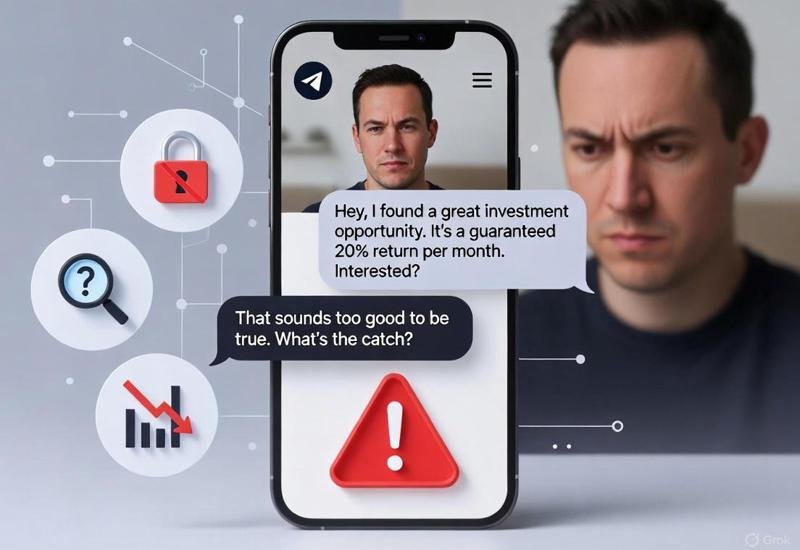
You just got added to a Telegram group promising “exclusive crypto signals” that guarantee 300% returns. Or maybe someone claiming to be from Binance support messaged you about suspicious activity on your account. Perhaps you saw an exciting airdrop announcement from what looks like an official project channel. Your finger hovers over the link, and you’re thinking, “Should I click this?”
Stop right there. You might be looking at a Telegram crypto scam—and by the end of 2025, these scams contributed to over $3.4 billion in reported crypto losses from hacks and exploits alone, according to Chainalysis. Overall, cybercrime losses hit $16 billion, per the FBI’s IC3 annual report, with Telegram being a key vector for social engineering attacks. Between late 2024 and the close of 2025, malware-based Telegram crypto scams surged by an alarming 2,000%, with scammers exploiting the platform’s features to deceive users and steal crypto assets. Chinese-language scam operations on Telegram have grown so massive that some channels process up to $2 billion monthly—dwarfing historic dark web markets.
This article will teach you exactly how to spot a Telegram crypto scam before it’s too late. We’ll cover the most common tactics, the red flags that scream “danger,” and practical steps to protect yourself. Let’s make sure you’re not the next victim.
Table of Contents
Why Telegram Has Become a Scammer’s Paradise
Before we dive into spotting scams, let’s understand why Telegram crypto scam operations have exploded. It’s not random—the platform’s features make it uniquely attractive to fraudsters.
The Perfect Storm of Scam-Friendly Features
According to cybersecurity researchers, Telegram offers scammers several advantages that traditional websites don’t:
- Anonymity: Telegram requires no verified identity to create an account. Scammers can spin up dozens of fake profiles in minutes without providing real names, phone numbers, or any traceable information.
- Massive Group Capabilities: Channels can host up to 200,000 members publicly, giving scammers instant access to huge audiences. Compare this to WhatsApp’s 1,024-member limit—Telegram is built for scale.
- Programmable Bots: Telegram’s powerful bot API lets scammers automate phishing attacks, create fake verification systems, and build convincing interfaces that mimic legitimate services. These bots are intrusive—if you don’t block them, they’ll keep knocking on your door.
- Direct Messaging Without Consent: Unlike most platforms, anyone can message you on Telegram without being connected first. This enables mass outreach for phishing campaigns targeting thousands simultaneously.
- Crypto Payment Integration: Telegram supports cryptocurrency transactions natively, making it seamless for scammers to request and receive payments without leaving the app.
Furthermore, Telegram’s moderation is notoriously lax. While the platform has made some improvements after regulatory pressure in 2025, enforcement remains inconsistent, allowing Telegram crypto scam operations to thrive longer than they would on heavily moderated platforms.
Furthermore, Telegram’s moderation is notoriously lax. While the platform has made some recent improvements after regulatory pressure, enforcement remains inconsistent, allowing scam operations to thrive longer than they would on heavily moderated platforms.
The 8 Most Common Telegram Crypto Scam Types
Understanding the tactics scammers use is your first line of defense. Here are the most prevalent Telegram crypto scam operations you’ll encounter in 2026, including emerging trends like AI deepfakes and “scrolling scams” (where users are tricked while browsing channels).
1. Fake Verification Bot Scams
This has become the #1 scam on Telegram. Through 2025, phishing bot attacks surged 2,000%, with bots posing as wallet verifiers or customer support.
How It Works: You receive a message claiming you need to “verify” your wallet for an exclusive airdrop (free token distribution), trading group membership, or security check. The bot looks official—complete with professional branding and convincing copy. However, the “KYC verification” (Know Your Customer, a legit ID check process) actually means depositing cryptocurrency, which goes straight to the attackers’ account while you get nothing. In more sophisticated versions, these bots install malware on your device or trick you into revealing your seed phrase (a secret 12-24 word code to access your wallet) through fake wallet connection interfaces.
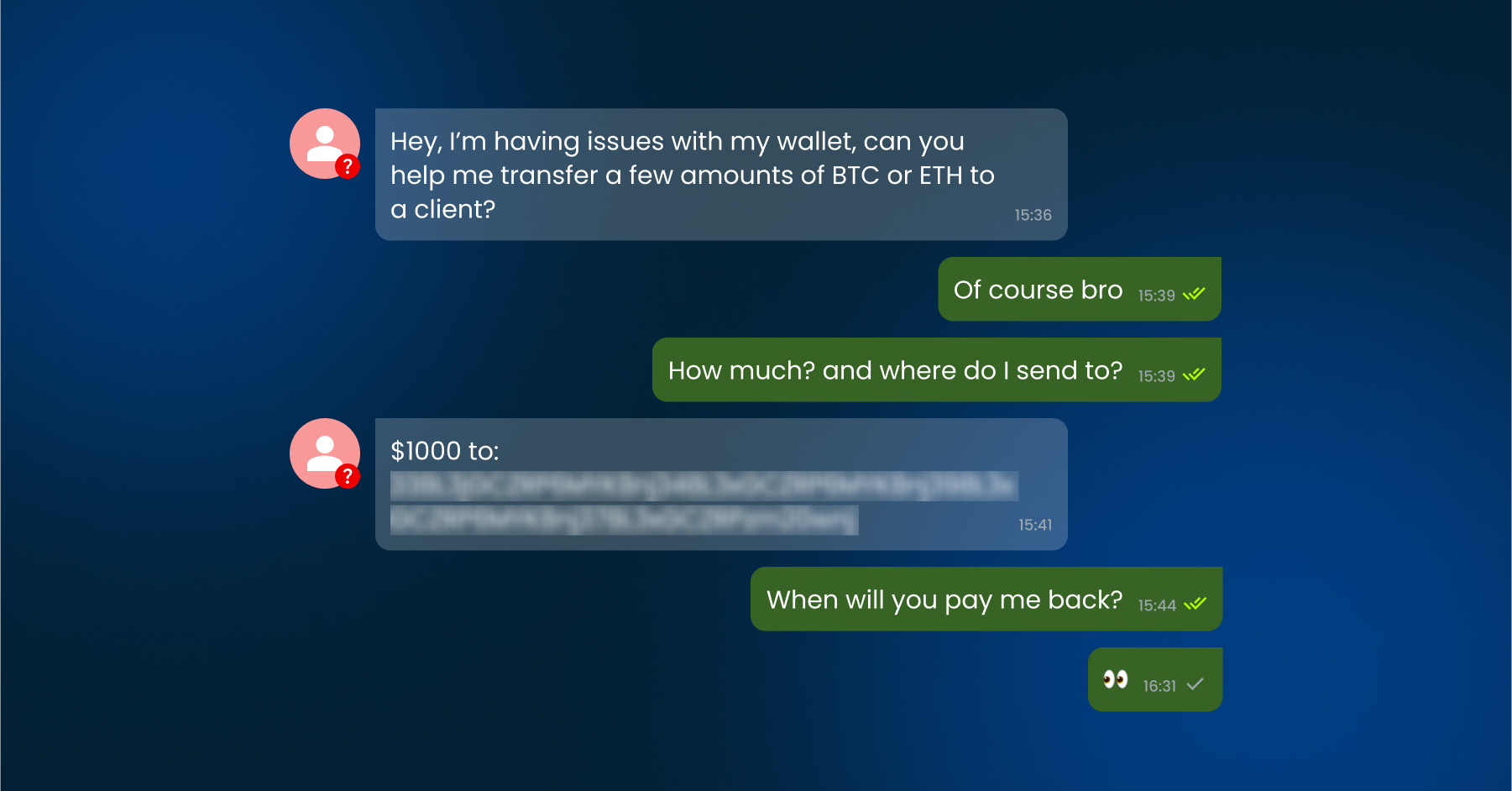
(Example of a fake Telegram scam message impersonating support.)
2. Copycat Channel Scams
Criminals build replica channels of legitimate crypto projects to trick victims into joining fake communities. The admins use identities almost matching the real ones, with the same names, profile images, and pinned posts.
How It Works: You search for “Ethereum Official” and find two channels—both look identical. One is real, one is fake. The fake channel has slightly different handles (maybe “Ethereum_Official” vs “EthereumOfficial”) and posts phishing links disguised as announcements. You won’t notice the difference until your wallet is drained.
These scammers are sophisticated. They’ll copy entire conversation histories from the real channel to make their fake version look active and legitimate.
3. Fake Crypto Expert & Signal Groups
Scammers pose as knowledgeable cryptocurrency experts who offer investment advice or trading signals for a fee. They create channels claiming to provide exclusive insights and promising high returns.
How It Works: You’re invited to join a “VIP trading group” where a supposed expert shares signals. The channel showcases fake credentials, fabricated success stories, and misleading charts. You pay for premium access—anywhere from $50 to $500 monthly—and receive either completely inaccurate information or nothing at all.
Moreover, some operate elaborate pump-and-dump schemes. The “expert” tells the group to buy a specific low-cap coin, creating artificial demand that pumps the price. Once the price rises, the scammers (who bought first) dump their holdings on the group members, leaving everyone else with worthless tokens.
4. Fake Giveaway & Airdrop Scams
These Telegram crypto scam operations exploit the popularity of legitimate airdrops. Scammers impersonate well-known figures or projects, claiming to organize a giveaway where users must send a small amount of crypto as a “participation fee” or “gas fee” to receive much larger returns.
How It Works: You see an announcement: “Vitalik Buterin is giving away 10 ETH! Send 0.1 ETH to this address to verify your wallet and receive 1 ETH back!” It sounds too good to be true—because it is. You send the crypto, and of course, you receive nothing back.
These scams often use urgency tactics: “Only 100 spots available!” or “Ends in 2 hours!” to pressure you into acting without thinking.

5. Impersonation & Fake Support Scams
A sophisticated ring exposed in 2025 spoofed Binance support messages via SMS and followed up with fake Telegram accounts. Over 130 victims were identified.
How It Works: You receive a message appearing to be from your exchange’s support team, warning that your account has been compromised or frozen. They direct you to transfer funds to a “safe” wallet for protection—actually controlled by the scammers. Telegram enables this direct, anonymous contact between scammers and victims.
Alternatively, scammers lurk in legitimate project channels, waiting for someone to post a problem. The moment you mention an issue, you’ll receive multiple private messages from fake “support” accounts offering to help.
6. Investment Group Scams (Pig Butchering)
According to California’s DFPI, these Telegram crypto scam operations involve private group chats promoting fraudulent investment opportunities. They’re sophisticated and psychologically manipulative.
How It Works: You’re added to an investment group led by a “guru” who appears to be a successful trader. Early on, the guru gives general market advice to gain the group’s confidence. Other members (actually fake accounts or bots) post screenshots of their “profits.”
After trust is established, the guru pushes the group to invest in a specific platform or token. The initial trades might even be profitable (using your own money) to build more confidence. Then they encourage larger investments—and that’s when everything disappears.
These “pig butchering” operations got their name from the practice of “fattening up” victims with small wins before the slaughter. Some Chinese-language channels on Telegram have processed tens of billions of dollars through these schemes.
7. Romance Scams Leading to Crypto Fraud
While this starts on dating apps, it often migrates to Telegram for the actual scam. The scammer builds a romantic connection over weeks or months, then introduces crypto investment opportunities.
How It Works: Your new romantic interest tells you about an “amazing” crypto trading platform they use. They help you sign up, guide your first (successful) trades, and encourage you to invest more. The platform is completely fake—numbers on a screen with no real money backing them. When you try to withdraw, there’s always a “tax” or “fee” required first, which you’ll never get back.
Frighteningly, scammers now use deepfake technology during video calls to impersonate trusted individuals, making these schemes nearly impossible to detect visually.
8. Phishing Links & Malicious Files
The simplest but still effective approach. Scammers drop seemingly innocent links or files in group chats or direct messages.
How It Works: You click a link that looks like it goes to a legitimate exchange, wallet, or crypto news site. Instead, it’s a perfect replica designed to steal your login credentials or install malware. The malware can be cross-platform, targeting Mac, Windows, and Linux systems, and uses Python-based or Golang-based code to bypass traditional security measures.
12 Red Flags That Scream “Telegram Crypto Scam”
Now you know the tactics. Here are the specific warning signs that should make you immediately suspicious:
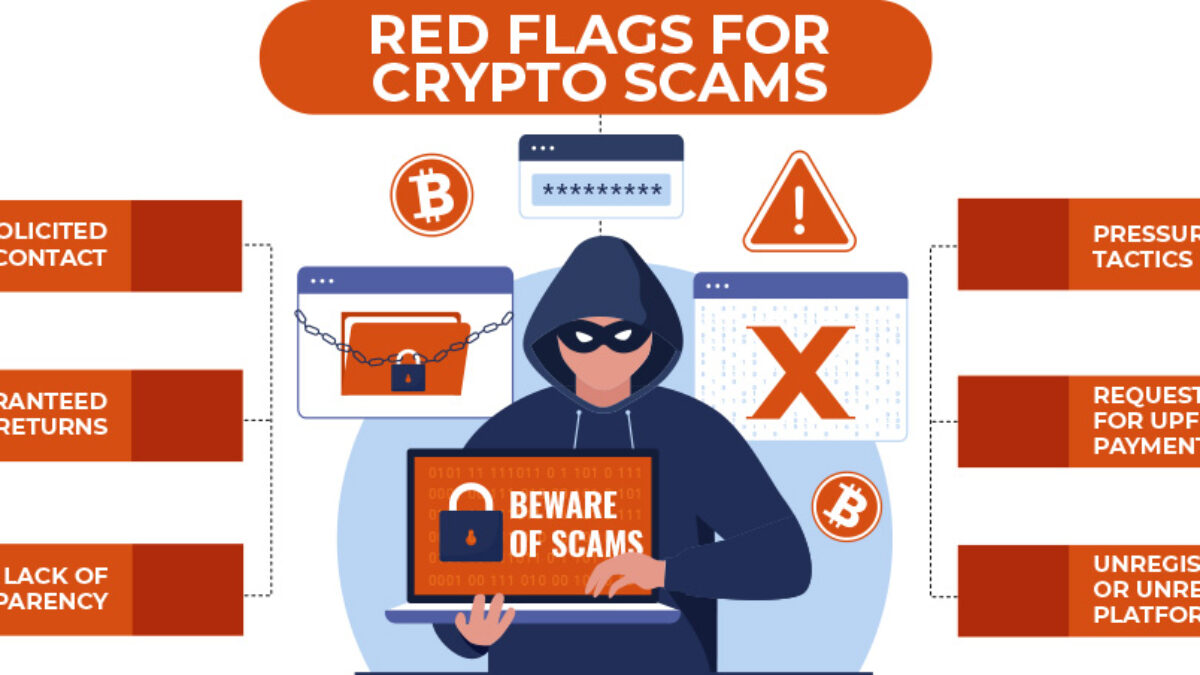
🚩 Red Flag #1: Unsolicited Direct Messages
Legitimate crypto projects and exchanges will never message you first. If someone slides into your DMs offering investment advice, support help, or exclusive opportunities, it’s almost certainly a Telegram crypto scam.
🚩 Red Flag #2: Pressure to Act Immediately
Scammers create artificial urgency: “Offer expires in 1 hour!” or “Only 50 spots left!” This prevents you from researching or thinking critically. Legitimate opportunities don’t pressure you this way.
🚩 Red Flag #3: Requests for Payment or Crypto First
Legitimate services never ask you to send crypto upfront to receive something better in return. This includes “verification deposits,” “gas fees,” or “unlocking fees.” It’s always a scam.
🚩 Red Flag #4: Asking for Your Seed Phrase or Private Keys
This is the nuclear warning sign. No legitimate service, bot, or support team will ever ask for your seed phrase or private keys. Legitimate services will never request this information. If they do, they’re trying to steal your funds.
🚩 Red Flag #5: Too-Good-to-Be-True Returns
If someone promises 300% returns, guaranteed profits, or “risk-free” investments, run. The crypto market is volatile—nobody can guarantee specific returns, and certainly not astronomical ones.
🚩 Red Flag #6: Channel Names with Slight Variations
Look carefully at channel handles. Scammers use subtle differences: replacing “l” with “I,” adding underscores, or slight misspellings. “@EthereumOfficial” might be real, but “@Ethereum_0fficial” (with a zero) is fake.
🚩 Red Flag #7: No Verified Badge (For Major Projects)
Telegram offers verification badges for authentic accounts of major organizations and public figures. If a channel claiming to be from a major exchange or well-known project doesn’t have this badge, be extremely suspicious.

(Example of Telegram’s verified blue star badge.)
🚩 Red Flag #8: Asking You to Download Unknown Software
If a bot or group administrator asks you to download software, run code in your terminal, or install browser extensions, stop immediately. These are malware delivery mechanisms.
🚩 Red Flag #9: Fake Engagement & Bot Activity
Notice if group conversations feel scripted or repetitive. Scammers use bots to inflate member counts and create fake engagement. Real communities have natural, varied conversations.
🚩 Red Flag #10: Celebrity Endorsements Without Verification
Scammers love dropping celebrity names: “Elon Musk recommends this!” or “This is Vitalik’s new project!” Real celebrities don’t randomly endorse Telegram groups, and any legitimate endorsement would be verifiable on their official channels.
🚩 Red Flag #11: Poor Grammar & Spelling
While not foolproof (some scammers have excellent English), many Telegram crypto scam messages contain awkward phrasing, grammatical errors, or odd sentence structures that indicate they’re not from legitimate, professional organizations.
🚩 Red Flag #12: Can’t Find Independent Verification
If you can’t find any mention of the project, opportunity, or individual on legitimate crypto news sites, forums, or the project’s official website, that’s a major warning sign. Real opportunities leave digital footprints.
How to Protect Yourself: The Action Plan
Understanding scams is half the battle. Here’s exactly what to do to protect yourself from Telegram crypto scam operations:
Step 1: Verify Everything Through Official Channels
Never join a Telegram group through a link sent directly to you. Instead, go to the project’s official website and find their verified social media links there. Bookmark these official channels so you always access them correctly.
Step 2: Enable Two-Factor Authentication
Secure your Telegram account with 2FA to add an extra layer of protection. This prevents scammers from hijacking your account even if they somehow get your password.
Furthermore, set up automatic termination of inactive Telegram sessions. In Telegram, go to Settings → Devices → Automatically terminate sessions → If inactive for → 1 week. This limits damage if your account is compromised.
Step 3: Adjust Your Privacy Settings
Go to Settings → Privacy and Security, and set:
- Phone Number: “Nobody”
- Last Seen: “Nobody”
- Profile Photo: “My Contacts”
- Groups & Channels: “My Contacts”
This reduces your exposure to scam messages by limiting who can add you to groups or contact you directly.
Step 4: Block Intrusive Bots Immediately
If a bot messages you unexpectedly and you’re sure you don’t need it, block it. Bots are highly intrusive—they’ll keep knocking on your door otherwise.
Step 5: Never Click Unknown Links
Refrain from clicking links or downloading files from unverified sources. If you receive a link, hover over it (on desktop) to see the actual URL. Does it match the claimed destination? When in doubt, type the website address directly into your browser.
Step 6: Use Security Software
Regularly update and use antivirus tools to detect and block malware. Modern Telegram crypto scam malware is sophisticated, but security software catches many attempts.
Step 7: Report and Block Scammers
Use Telegram’s built-in reporting features to flag suspicious accounts and groups. This helps protect others. Additionally, notify the relevant crypto project if impersonation is involved—they want to know about fake channels using their name.
Step 8: Educate Yourself Continuously
Scammers constantly evolve their tactics. Stay informed about the latest scam methods by following legitimate crypto security accounts and reading updates from exchanges and security firms.
What to Do If You Think You’ve Been Scammed
Despite best efforts, scams happen. If you suspect you’ve fallen victim to a Telegram crypto scam, act immediately:
1. Stop All Communication: Block the scammer and leave any suspicious groups immediately. Don’t engage further—they might try to scam you again with “recovery” services.
2. Secure Your Accounts: Change passwords for all crypto-related accounts. Enable 2FA everywhere. If you revealed your seed phrase, transfer any remaining funds to a new wallet with a new seed phrase immediately.
3. Document Everything: Take screenshots of messages, transaction IDs, wallet addresses, and any other evidence. This helps if you report to authorities or attempt recovery.
4. Report to Authorities: File reports with your local law enforcement, the FBI’s IC3 (if in the US), and regulatory bodies like the SEC or CFTC. Also report to Telegram itself.
5. Notify Your Exchange: If the scam involved your exchange account, contact their support immediately. They might be able to freeze assets or provide assistance.
6. Don’t Fall for Recovery Scams: Scammers often target previous victims with fake “recovery services” promising to get your money back for an upfront fee. These are secondary scams. Legitimate law enforcement never charges victims for investigations.
The Bottom Line: Healthy Skepticism Saves Money
Here’s the uncomfortable truth: in 2025, Telegram has become one of the primary vectors for crypto fraud globally. Chinese-language scam markets on the platform process billions monthly. Malware attacks have surged 2,000%. Sophisticated operations use AI deepfakes and professional-looking infrastructure.
The good news? You can protect yourself by following one simple principle: treat every unsolicited message on Telegram with extreme skepticism, especially when money is involved.
Real crypto opportunities don’t find you through random DMs. Legitimate support teams don’t ask for seed phrases. Actual experts don’t guarantee returns. If something feels off—even slightly—trust that instinct.
Telegram itself isn’t the enemy. Plenty of legitimate crypto communities thrive on the platform, sharing knowledge and building genuine connections. However, you must approach every interaction with the assumption that scammers might be present, because statistically, they probably are.
Stay skeptical, verify independently, and never let urgency override caution. Your crypto security depends on it.
Helpful Resources:
- OKX: Telegram Crypto Scams 2025 – Latest malware tactics
- iCoda: Unmasking Telegram Crypto Scams – Comprehensive scam types
- Creditcoin: Top 8 Telegram Scams – Warning signs
- California DFPI: Crypto Scam Tracker – Official scam database
- FBI IC3: Report Cybercrime – US reporting center
- Panda Security: 20+ Telegram Scams – Additional scam types and avoidance tips
Disclaimer: This article is for educational purposes only and is not financial advice. Cryptocurrency is highly volatile and risky. Only invest money you can afford to lose. Past performance is no guarantee of future results. Always do your own research and consider consulting a qualified financial advisor.
