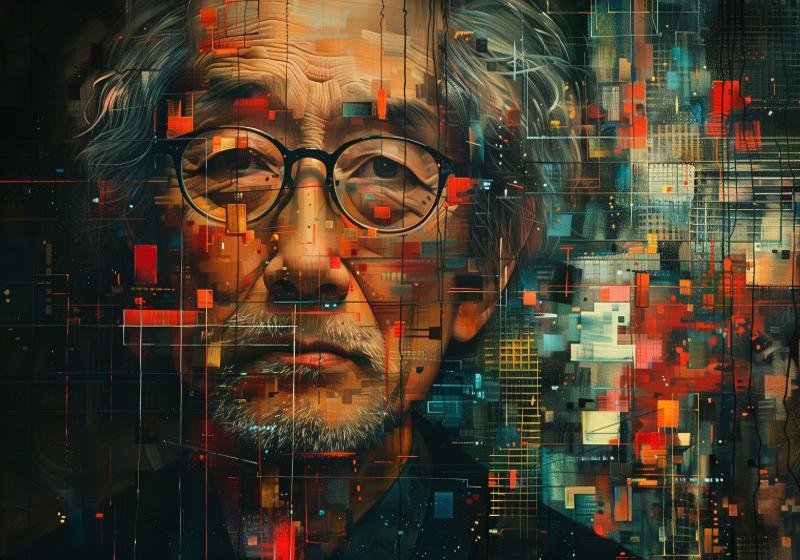
If you own even a tiny fraction of Bitcoin, you’re connected to one of the greatest mysteries of the modern age: Who is Satoshi Nakamoto? This name—likely a pseudonym—belongs to the person or group who created Bitcoin, published its groundbreaking whitepaper in 2008, and then vanished into thin air in 2011, never to be heard from again.
Here’s what makes this particularly fascinating for anyone holding BTC: Satoshi Nakamoto isn’t just some random historical figure. They’re estimated to own approximately 1.1 million Bitcoin, which at current prices is worth over $125 billion—making them potentially the 11th richest person on Earth. Moreover, these coins have sat completely untouched for over 14 years, and if they ever moved, your Bitcoin’s value could be dramatically affected.
This article will explore who Satoshi Nakamoto might be, why they disappeared, and most importantly, why this mystery actually matters for your investment. Let’s dive into the rabbit hole.
The Birth of Bitcoin: A Revolution in Digital Money
Before we unravel the mystery of Satoshi Nakamoto, let’s understand what they created. On October 31, 2008—Halloween night—an academic paper appeared on a cryptography mailing list. Titled “Bitcoin: A Peer-to-Peer Electronic Cash System,” it proposed something revolutionary: digital money that didn’t need banks, governments, or any central authority.
Think about that for a moment. Every dollar in your bank account requires trust in banks, faith that the government won’t devalue your currency, and reliance on payment processors to move your money around. Bitcoin eliminated all of that. Instead, it used mathematics, cryptography, and a decentralized network of computers to create a system where transactions could happen directly between people.
On January 3, 2009, Satoshi Nakamoto mined the very first Bitcoin block—known as the Genesis Block. Embedded in this block was a message that revealed Satoshi’s motivation: “The Times 03/Jan/2009 Chancellor on brink of second bailout for banks.” This was a direct reference to the 2008 financial crisis, suggesting that Bitcoin was created as an alternative to a failing traditional financial system.
For the next two years, Satoshi actively developed Bitcoin, corresponded with early adopters, fixed bugs, and helped lay the foundation for what would become a multi-trillion-dollar asset class. Then, in mid-2010, they handed control over to other developers. By April 2011, Satoshi sent their final message saying they had “moved on to other things,” and disappeared completely.
What We Actually Know About Satoshi Nakamoto
Despite countless investigations, journalists combing through every clue, and even an HBO documentary, Satoshi Nakamoto’s true identity remains unknown. However, we do have some breadcrumbs:
The Name and Persona
The name “Satoshi Nakamoto” is Japanese, and the persona presented as a man living in Japan. Nevertheless, many experts believe this was deliberately misleading. The Bitcoin whitepaper is written in perfect English, and Satoshi’s online communications showed no signs of being a non-native speaker. Furthermore, their posting times on forums suggested someone living in a US or European time zone, not Japan.
Technical Brilliance
Whoever Satoshi was, they possessed extraordinary knowledge across multiple disciplines—cryptography, computer science, economics, and game theory. The Bitcoin protocol elegantly solved the “double-spending problem” that had stumped digital currency researchers for decades. This level of expertise suggests either a highly skilled individual or a small team of experts.
Philosophical Motivations
Throughout their writings, Satoshi expressed concerns about centralized control and the need for trust in traditional financial systems. In a 2009 post, they stated: “The root problem with conventional currency is all the trust that’s required to make it work.” This philosophical bent has led many to believe Satoshi came from the cypherpunk movement—a community of cryptography advocates who championed privacy and decentralization.
The Disappearing Act
Perhaps most telling is what Satoshi did after creating Bitcoin. They never cashed out. They never spent their fortune. They never sought recognition, fame, or fortune. This behavior is so unusual that it’s become central to Bitcoin’s mythology. As CoinDesk notes, “By remaining anonymous, Satoshi removed any personal bias or centralized control from the equation, ensuring bitcoin could organically grow as a community.”
The Leading Candidates: Who Could Satoshi Be?
Over the years, numerous people have been accused of being Satoshi Nakamoto. Let’s examine the most credible candidates:
Hal Finney (1956-2014)
Hal Finney was an early cryptographer and the first person besides Satoshi to use the Bitcoin software. He received the very first Bitcoin transaction from Satoshi, and his writing style has been analyzed as the closest match to Satoshi’s among all candidates.
Interestingly, Finney lived just blocks away from a man named Dorian Satoshi Nakamoto in Temple City, California, which has fueled theories that Finney used his neighbor’s name as a pseudonym. Finney always denied being Satoshi until his death from ALS in 2014. Many in the Bitcoin community consider him the most likely candidate.
Nick Szabo
Nick Szabo is a computer scientist who created “Bit Gold” in the 1990s—a precursor to Bitcoin with remarkably similar concepts. His writing style and technical knowledge align closely with Satoshi’s, and he was actively discussing digital currency ideas around the time Bitcoin was created. However, Szabo has consistently denied being Satoshi.
Adam Back
Adam Back created Hashcash, a proof-of-work system on which Bitcoin’s mining is based. Satoshi even cited Back’s work in the Bitcoin whitepaper. In a 2025 interview, Back joked that rumors about him being Satoshi were “not crazy,” but pointed out he started working on Bitcoin-related projects too late (after 2013) to have created it.
Len Sassaman (1980-2011)
Len Sassaman was a cypherpunk and cryptographer who tragically took his own life in 2011. A memorial to Sassaman is permanently embedded in Bitcoin’s blockchain, and his background in cryptography makes him a compelling candidate. Polymarket bettors even predicted an HBO documentary would name him as Satoshi, though that didn’t pan out.
Peter Todd
In 2024, filmmaker Cullen Hoback’s HBO documentary “Money Electric: The Bitcoin Mystery” named Canadian developer Peter Todd as Satoshi based on circumstantial evidence like chat messages and posting patterns. Todd immediately denied it, calling the theory “ludicrous” and “grasping at straws.” Most of the crypto community dismissed this claim as speculative at best.
Craig Wright (The Fake Satoshi)
Craig Wright, an Australian computer scientist, is the only person who has actively claimed to be Satoshi Nakamoto. However, in March 2024, a UK court definitively ruled that Wright was not Satoshi and that his evidence consisted of forgeries and lies. He’s now known in the crypto community as “Faketoshi.”
Satoshi’s Bitcoin Fortune: The $100 Billion Question
Now let’s talk about why this mystery isn’t just a historical curiosity—it has real implications for every Bitcoin holder. Satoshi Nakamoto is estimated to own approximately 1.1 million Bitcoin, mined during Bitcoin’s first year when few people knew about or cared about the project.
To put this in perspective:
- That’s about 5% of Bitcoin’s total 21 million supply
- At current prices around $90,000 per BTC (as of December 2025), that’s roughly $100 billion
- It’s more Bitcoin than BlackRock’s ETF holds (approximately 750,000 BTC)
- It’s more than MicroStrategy’s holdings (approximately 630,000 BTC)
- If Satoshi is alive, they’d be among the 11th richest people on Earth
The jaw-dropping part? These coins have never moved. Not a single satoshi has been spent since 2010. The wallet addresses are public (the Genesis Block address is 1A1zP1eP5QGefi2DMPTfTL5SLmv7DivfNa), and anyone can verify on the blockchain that they remain untouched.
Satoshi vs. The Giants: The New Power Balance of 2026
In the early days of Bitcoin, Satoshi’s 1.1 million BTC was just a massive pile of experimental code. But as we navigate 2026, that “pile” has transformed into one of the most significant financial reserves on the planet, rivaling—and in some cases, dwarfing—the world’s most powerful institutional players.
To understand the sheer scale of Satoshi’s wealth today, let’s look at how it stacks up against the “Big Three” of the modern financial era:
- The Institutional Giant (BlackRock): For years, the Bitcoin community watched as BlackRock’s spot ETF (IBIT) swallowed up supply. By 2026, while BlackRock remains a dominant force with holdings of around 750,000 BTC, Satoshi still commands nearly 50% more Bitcoin than the world’s largest asset manager.
- The Corporate Crusader (MicroStrategy): Even Michael Saylor’s MicroStrategy, famous for its aggressive “Bitcoin-at-any-cost” strategy, trails behind with approximately 630,000 BTC. Satoshi’s untouched hoard is nearly double the size of the largest corporate treasury on Earth.
- National Reserves & Sovereign Wealth: As more nations begin to explore Bitcoin as a strategic reserve asset, Satoshi’s 1.1 million BTC remains the ultimate “benchmark.” In 2026 terms, this anonymous creator effectively holds more “digital gold” than the declared reserves of most small-to-medium nations, making Satoshi a “sovereign entity” of one.
Why Satoshi’s Identity Matters for Your Bitcoin
You might be thinking, “Okay, fascinating mystery, but why should I care?” Here’s why Satoshi Nakamoto’s identity and their bitcoin holdings have real implications for your investment:
Reason #1: The Market Impact If Those Coins Move
If Satoshi’s wallet suddenly showed activity, it would immediately trigger massive market volatility. Think about it: 1.1 million Bitcoin suddenly entering circulation would represent a shock to the market.
According to analysis, if even a portion of those coins were sold, short-term panic could drop Bitcoin’s price by 10-15%. However, some experts argue the impact would be more psychological than fundamental. After all, Satoshi’s 1.1 million BTC represents only about 5% of Bitcoin’s total market cap.
The real danger isn’t just the supply shock—it’s what the movement would signal. As one analyst put it: “If the creator appears to lose confidence in Bitcoin, then what are the rest of us to believe?” The psychological “faith effect” could be more damaging than the actual selling pressure.
Reason #2: Scarcity Perception
Many Bitcoin investors consider Satoshi’s coins to be effectively “burned”—permanently removed from circulation. This makes Bitcoin even more scarce than its 21 million cap suggests. Satoshi’s inactivity reinforces Bitcoin’s scarcity and value proposition.
If those coins suddenly became active, it would shatter this perception and increase Bitcoin’s effective circulating supply by 5% overnight.
Reason #3: Decentralization and Trust
Bitcoin’s greatest strength is that it doesn’t depend on any single person or entity. Satoshi’s anonymity is a feature, not a bug. It ensures that Bitcoin remains truly decentralized, with no founder who can be pressured, corrupted, or influenced by governments or corporations.
If Satoshi were revealed and remained active in the space, it could centralize influence around one person—undermining the very ethos that makes Bitcoin valuable. Moreover, revealing Satoshi’s identity could attract unwanted regulatory attention, potentially exposing them to legal challenges, tax claims, or even personal danger.
Reason #4: The Mystery Adds Value
Paradoxically, not knowing who Satoshi is has become part of Bitcoin’s brand and mystique. The anonymous creator who birthed a financial revolution and then walked away without taking a penny is a powerful narrative. It reinforces the idea that Bitcoin is bigger than any individual—it belongs to everyone and no one.
What If Satoshi Is Already Dead?
Many in the crypto community believe the most likely explanation for Satoshi’s silence is that they’re no longer alive. This theory gained traction after the deaths of Hal Finney in 2014 and Len Sassaman in 2011—both considered strong Satoshi candidates.
If Satoshi died without leaving instructions for accessing their Bitcoin, those coins would be lost forever—an accidental but powerful contribution to Bitcoin’s scarcity. The Bitcoin Manual argues that even if Satoshi sold everything, “Bitcoin has kept going despite Satoshi’s last communication in 2011, so I’m sure everything will be just fine.”
This perspective suggests that Bitcoin has matured beyond its creator. The network doesn’t need Satoshi anymore—it has tens of thousands of developers, millions of users, and a proven track record of over 15 years.
The 2024 Hunt for Satoshi: Documentaries and Dead Ends
In 2024, the hunt for Satoshi Nakamoto reached a fever pitch. Multiple people claimed to be Satoshi or were accused of being Satoshi, including:
- An HBO documentary naming Peter Todd (quickly debunked)
- Software developer Stephen Mollah claiming to be Satoshi at a London event (couldn’t provide proof)
- Craig Wright’s continued legal battles (lost definitively in UK court)
Nevertheless, none of these unmaskings held up under scrutiny. As CoinDesk observed, “Bitcoin reached an all-time high of $100,000, showing the market does not care that the asset’s creator is unknown.”
This illustrates an important point: while the mystery fascinates people, Bitcoin’s success doesn’t depend on solving it. The technology works. The network thrives. The adoption continues. Satoshi’s identity becomes less relevant with each passing year.
How Would We Know If the Real Satoshi Appeared?
If someone claimed to be Satoshi Nakamoto tomorrow, how could they prove it? Fortunately, cryptography provides a clear answer.
According to experts, there are two definitive ways to prove you’re Satoshi:
- Move the early Bitcoin: Transfer coins from known Satoshi wallet addresses. Since only someone with the private keys can move these coins, this would be irrefutable proof.
- Sign a message with Satoshi’s private key: Cryptographically sign a message using the private key associated with Satoshi’s known addresses. This proves ownership without actually moving the coins.
Anything less than these cryptographic proofs should be dismissed as speculation or fraud. Craig Wright claimed to have signed messages but was proven to have faked his evidence. Until someone can perform one of these two actions, all claims of being Satoshi remain unverified.
Should We Even Want to Know Who Satoshi Is?
Here’s an uncomfortable question: maybe we’re better off not knowing who Satoshi Nakamoto is. CoinDesk’s editorial argues that revealing Satoshi could have devastating consequences:
For Satoshi personally: They would face immediate security risks (kidnapping, extortion), overwhelming legal complications (tax implications, copyright claims, lawsuits), and complete loss of privacy.
For Bitcoin: It could create a centralization of influence, invite government interference, and potentially harm the narrative that Bitcoin belongs to no one.
For previous victims of doxxing attempts: People wrongly identified as Satoshi have had their lives ruined. Dorian Nakamoto endured a media storm. Hal Finney’s family suffered harassment. The quest for Satoshi has real human costs.
Perhaps the real lesson is that Satoshi’s greatest achievement wasn’t just creating Bitcoin—it was creating something that could thrive without them. By disappearing, they ensured Bitcoin would never become dependent on a single founder’s vision, ego, or mortal lifespan.
What This Means for Your Bitcoin Investment
So what’s the practical takeaway for someone holding Bitcoin? Here’s what you need to know:
Don’t panic about Satoshi: The coins haven’t moved in 14+ years. If they were going to move, they probably would have already. Many experts believe the private keys are lost forever or that Satoshi is deceased.
Understand Bitcoin’s resilience: Bitcoin has proven it can thrive without its creator. It’s survived regulatory crackdowns, exchange collapses, bear markets, and forks. The network’s decentralization is its strength.
The mystery is a feature: Satoshi’s anonymity removes single points of failure and keeps Bitcoin truly decentralized. This is actually good for your investment’s long-term prospects.
Be prepared for movement (just in case): If Satoshi’s coins ever do move, expect short-term volatility. However, long-term Bitcoin holders understand that temporary price swings don’t change the fundamentals. If you believe in Bitcoin’s long-term value proposition, short-term chaos shouldn’t shake you.
Beware of fake Satoshis: As Bitcoin’s price rises, more people will likely claim to be Satoshi. Ignore them unless they provide cryptographic proof. Every previous claim has been thoroughly debunked.
The Final Word: A Mystery That Defines Bitcoin
Who is Satoshi Nakamoto? We still don’t know—and we may never know. In January 2025, as Bitcoin reached new all-time highs, Satoshi’s theoretical net worth briefly surpassed $120 billion, making them one of the world’s ten richest individuals—one who has never spent a penny of their fortune.
That paradox perfectly captures what makes Bitcoin revolutionary. It’s money without a ruler, wealth without an owner, a network without a CEO. Satoshi Nakamoto gave the world a gift, refused to profit from it, and walked away. Whether they’re alive or dead, hidden or gone, they’ve achieved something remarkable: creating a system that doesn’t need them.
For Bitcoin holders, the mystery of Satoshi Nakamoto is a reminder of what you’re really investing in—not a company with a charismatic founder, but a protocol, an idea, a movement toward financial sovereignty that belongs to everyone and no one.
And that might be the most valuable thing Satoshi Nakamoto ever created: not Bitcoin itself, but the proof that something this important can exist without depending on the person who made it.
Helpful Resources:
- CoinGecko: Who Is Satoshi Nakamoto? – Comprehensive overview
- CoinDesk: Satoshi’s Identity Won’t Be Revealed – Why anonymity matters
- BeInCrypto: Who Is Satoshi Nakamoto? – Latest theories and updates
- Bitcoin.org: Original Whitepaper – Satoshi’s revolutionary paper
- Bleap Finance: How Many Bitcoins Does Satoshi Have? – Analysis of holdings
- The Crypto Times: Would Revealing Satoshi Crash Bitcoin? – Market impact analysis
Disclaimer: This article is for educational purposes only and is not financial advice. Cryptocurrency is highly volatile and risky. Only invest money you can afford to lose. Past performance is no guarantee of future results. Always do your own research and consider consulting a qualified financial advisor.
